
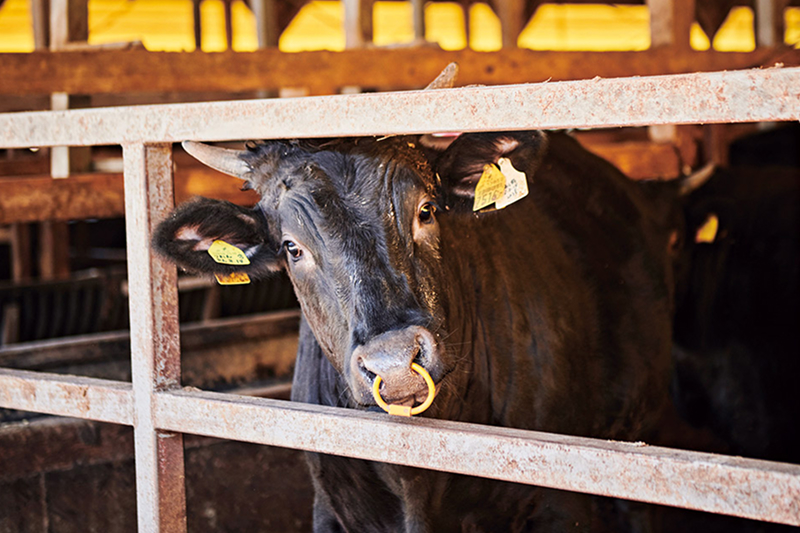
One of Japan’s Premier Wagyu Brands
Four Centuries of History
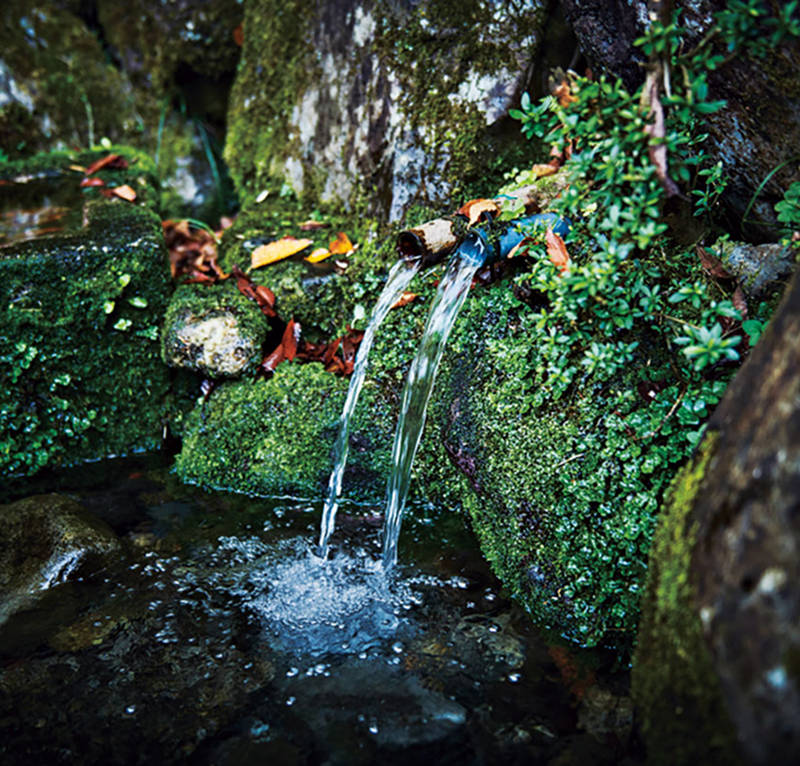
Surrounded by mountains, Shiga Prefecture is a fertile basin nourished by rivers flowing into Lake Biwa.
Since ancient times, the region has thrived as an agricultural heartland, where cattle supported farming
and transport, living closely alongside people. Raised in an environment with marked day‒night
temperature differences, the cattle grew strong and healthy before being prized as food.
During the Edo period, OMI-BEEF was known as Henpongan and was presented to the shogunate as a medicinal
delicacy. Transported by road and water, its reach expanded further with the opening of the Tokaido Main
Line in 1889. From the following year, cattle shipments began from Omi-Hachiman Station, marking the
first use of rail transport and bringing OMI-BEEF to wider national attention.
Despite hardships such as cattle epidemics and wartime controls, the brand endured. Guided by the Omi
merchant philosophy of
sanpo-yoshi—benefiting the seller, the buyer, and society—ongoing innovation helped establish OMI-BEEF
throughout Japan.
Known for its delicate yet deep umami, tender texture, and sweet, melt-in-the-mouth fat, OMI-BEEF is one
of Japanʼs most
distinguished wagyu brands. Built on principles of safety and reliability, its production system—rooted
in Shigaʼs rich water and natural environment—has been formally recognized. Today, OMI-BEEF is registered
by Japanʼs Ministry of Agriculture, Forestry and Fisheries as a Geographical Indication (GI) product.
Each Ranch
Pursuing Its Own Vision of Quality
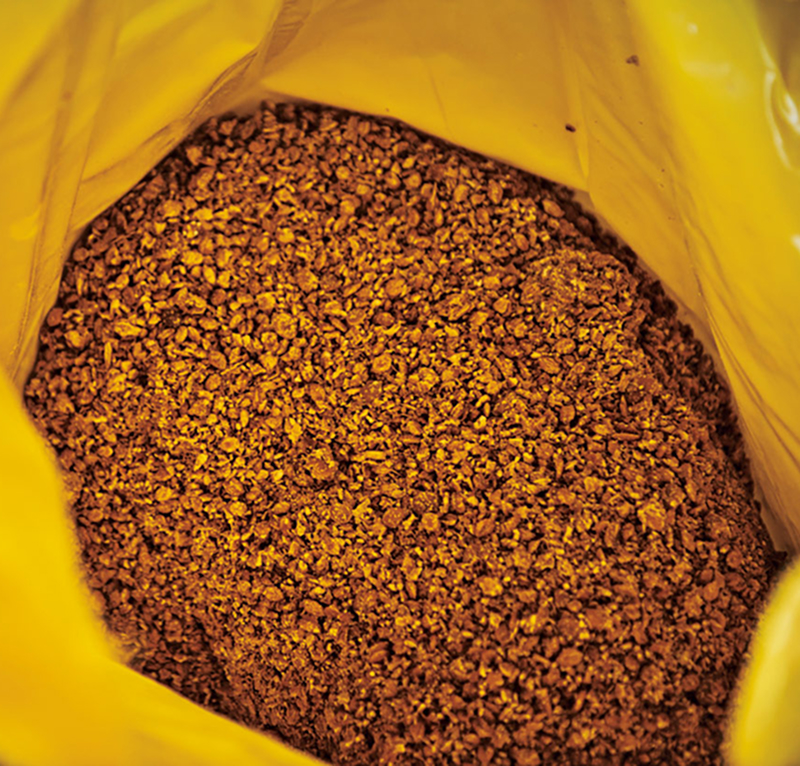
Raised with care in a rich natural environment, OMI-BEEF is known for its fine-grained texture and well-balanced marbling. As health awareness continues to grow, some farms are moving beyond a simple celebration of marbling alone. Instead, they are refining feed choices to draw out the natural depth of flavor in the lean meat. These individual approaches—shaped by changing values and a focus on wellbeing̶ are part of what makes each farmʼs OMI-BEEF compelling.
A Look at Nutrition
 PAGE TOP
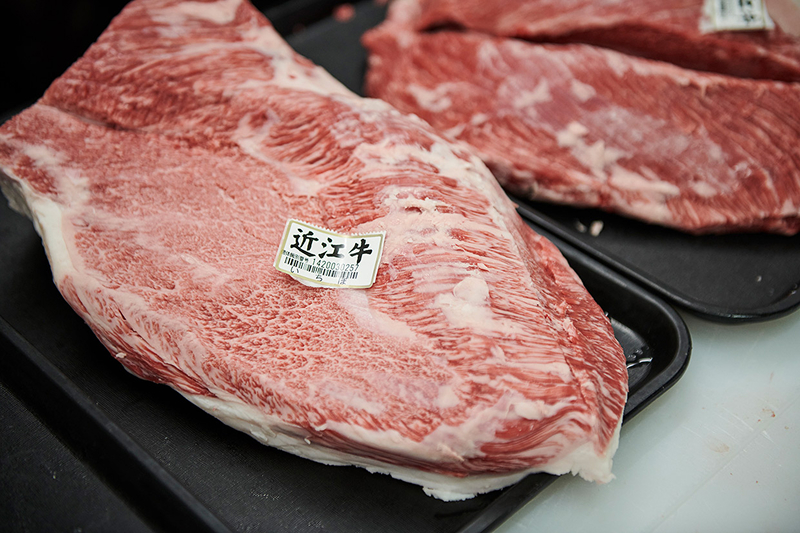
Japanese Black cattle are rich in high-quality protein with a well-balanced profile of essential amino acids, making it indispensable for building muscles, organs, and other bodily tissues. It also contains a wide range of B vitamins (including B1, B2, B6, and B12), as well as highly absorbable heme iron, which is essential for the production of red blood cells. Another key characteristic is its high content of oleic acid, a monounsaturated fatty acid. Unsaturated fatty acids are known to help reduce cholesterol levels, contributing to the prevention of lifestyle-related diseases such as arteriosclerosis, heart attacks, and certain cancers. A higher proportion of unsaturated fatty acids also tends to lower the melting point of fat. Generally, beef fat contains more saturated fatty acids than pork or chicken, resulting in a higher melting point. However, OMI-BEEF shows an especially high average oleic acid content of 56.6% (according to a 2014 survey), resulting in a lower fat melting point and a characteristically smooth, melt-in-the-mouth texture.
By Aya Sugiyama, Registered Dietitian (SOAI University)
Research courtesy of Kanekichi Yamamoto
Photography cooperation: Daikichi Farm
Photography: Hiroyuki Katsura